Everything gets harder above the speed of sound, and harder again above five times it.
02, Aerospace
Above the speed of sound the air stops getting out of the way in time, and every assumption that made subsonic flight easy has to be rebuilt.
Aerospace is where the atmosphere stops cooperating. Shock waves attach to leading edges, air heats to the point of dissociating, structures have to be light and survive loads they will only ever see once. It is the field with the least margin, which is exactly why it produces the most interesting engineering.
What almost everybody thinks
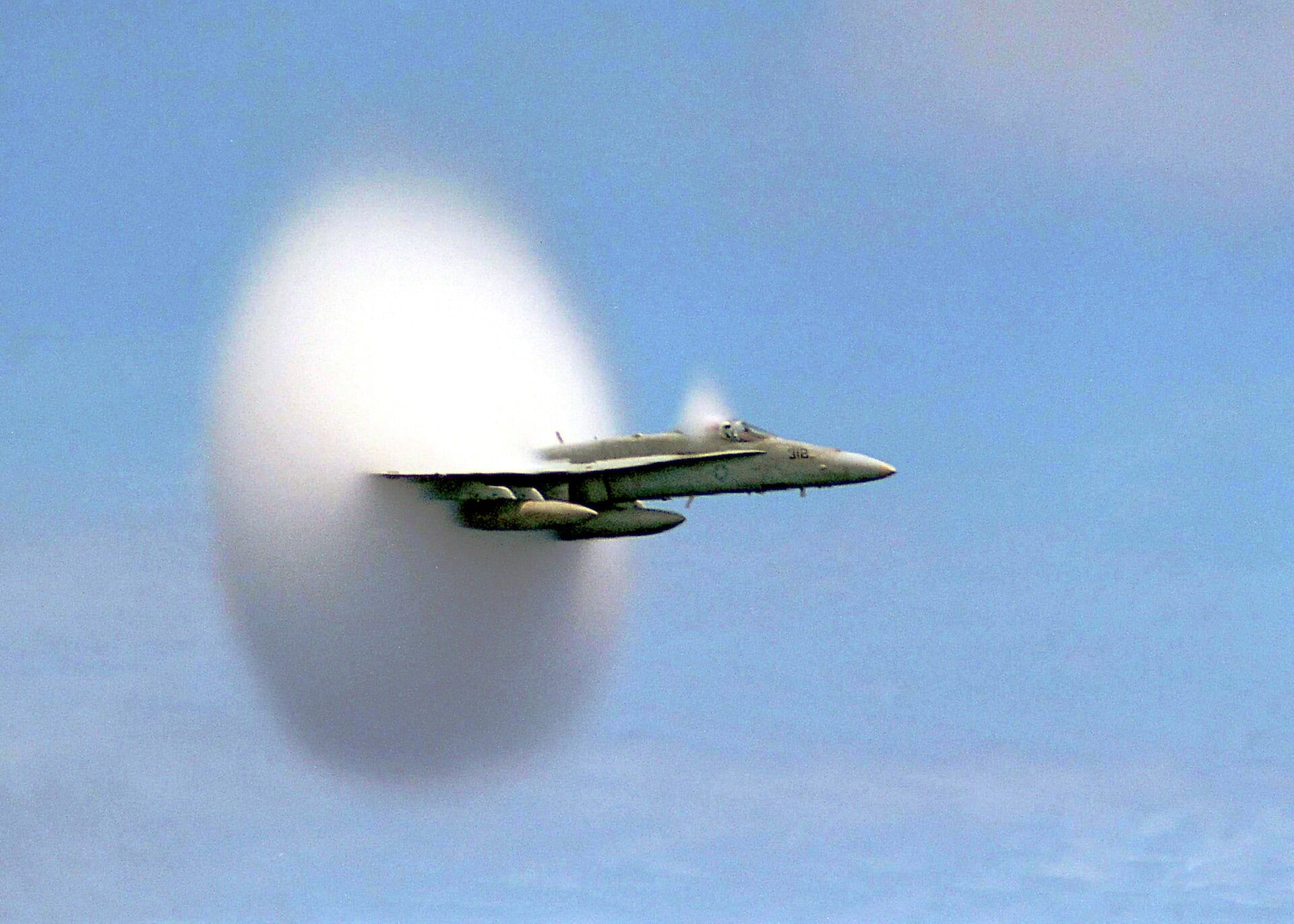
“The sonic boom happens once, at the moment an aircraft breaks the sound barrier.”
What is actually going on
The boom is continuous. A supersonic aircraft drags a shock cone behind it the whole time, and you hear a bang once because the cone sweeps past you once.
Machines that show it
- Bell X-1Straight wings, rocket engine, and the first aircraft to go through the barrier and come back.
- SR-71 BlackbirdTitanium, shock-cone inlets, and a cruise so hot the structure was designed loose.
- ConcordeAn ogival delta that made its own vortex lift at low speed, so it could land at all.
- X-15Reached the edge of space on a rocket and came back on a wing, the bridge between the two fields.
How it got here
- 1947Mach 1, in level flightThe Bell X-1, shaped like a bullet because a bullet was the one thing known to go that fast and stay pointed the right way.
- 1952The area ruleRichard Whitcomb worked out that transonic drag depends on how the whole cross-section changes along the body, which is why fast aircraft have waists.
- 1964Mach 3, sustainedThe SR-71 cruised where the airframe ran hot enough to expand several centimetres in flight, so it was built to leak on the ground.
- 1976Supersonic passengersConcorde carried people at Mach 2 for 27 years, and was defeated by economics and noise rather than by engineering.
- 2004Air-breathing hypersonicsNASA’s X-43A reached close to Mach 10 on a scramjet, combustion in a flow that never slows to subsonic.
What you can learn here
Topic pages are being written, these are the first five
- 01
What breaks at Mach 1
What is the sound barrier?
Shock formation, wave drag, and why the aircraft that first went through it looked like a bullet.
- 02
The heat problem at Mach 9
Why do fast vehicles get so hot?
Stagnation temperature, real-gas effects, and the difference between ablative, radiative and active cooling.
- 03
How rocket engines actually work
How does a rocket engine work?
Chamber pressure, expansion ratio, and why a nozzle designed for sea level is the wrong nozzle for space.
- 04
Light enough to fly, strong enough to survive
Why are aircraft wings so thin?
Load paths, safety factors, and the reason a wing bends several metres in test and is meant to.
- 05
Proving it before you fly it
How is aerospace hardware tested?
Wind tunnels, shaker tables, hot fire, and the campaign that turns an analysis into evidence.
Where this leads
Everything on Mach 9 is connected in both directions. A concept leads to the people whose job it is, and a job leads back to what you would need to learn.
- CareerAerospace EngineerDesigns and tests the vehicles that fly through atmosphere and vacuum.
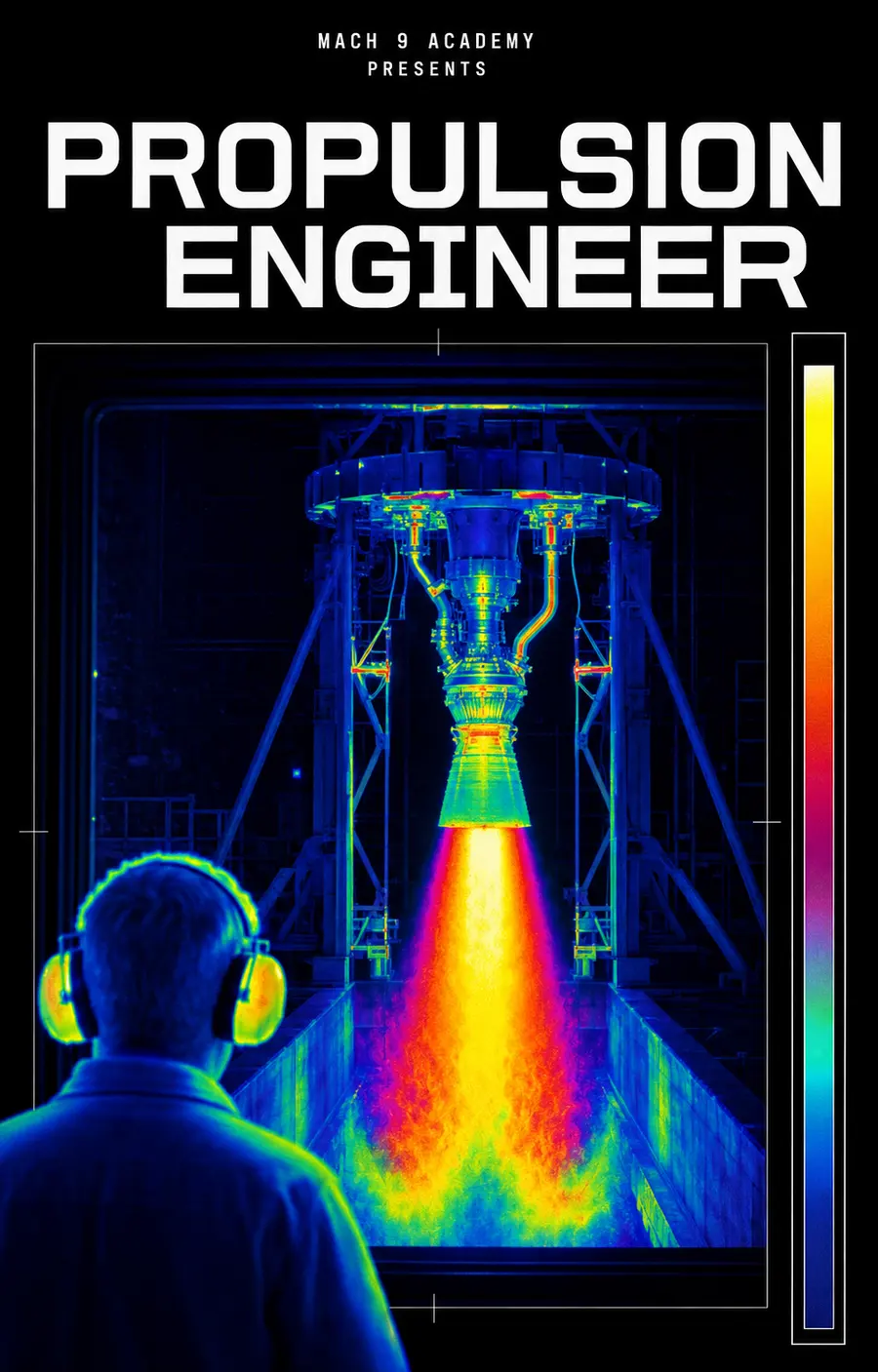
- CareerPropulsion EngineerDevelops engines and the test campaigns that prove they survive.
- CareerAerodynamicistWorks out how the air will behave around a shape before anyone commits to building it.
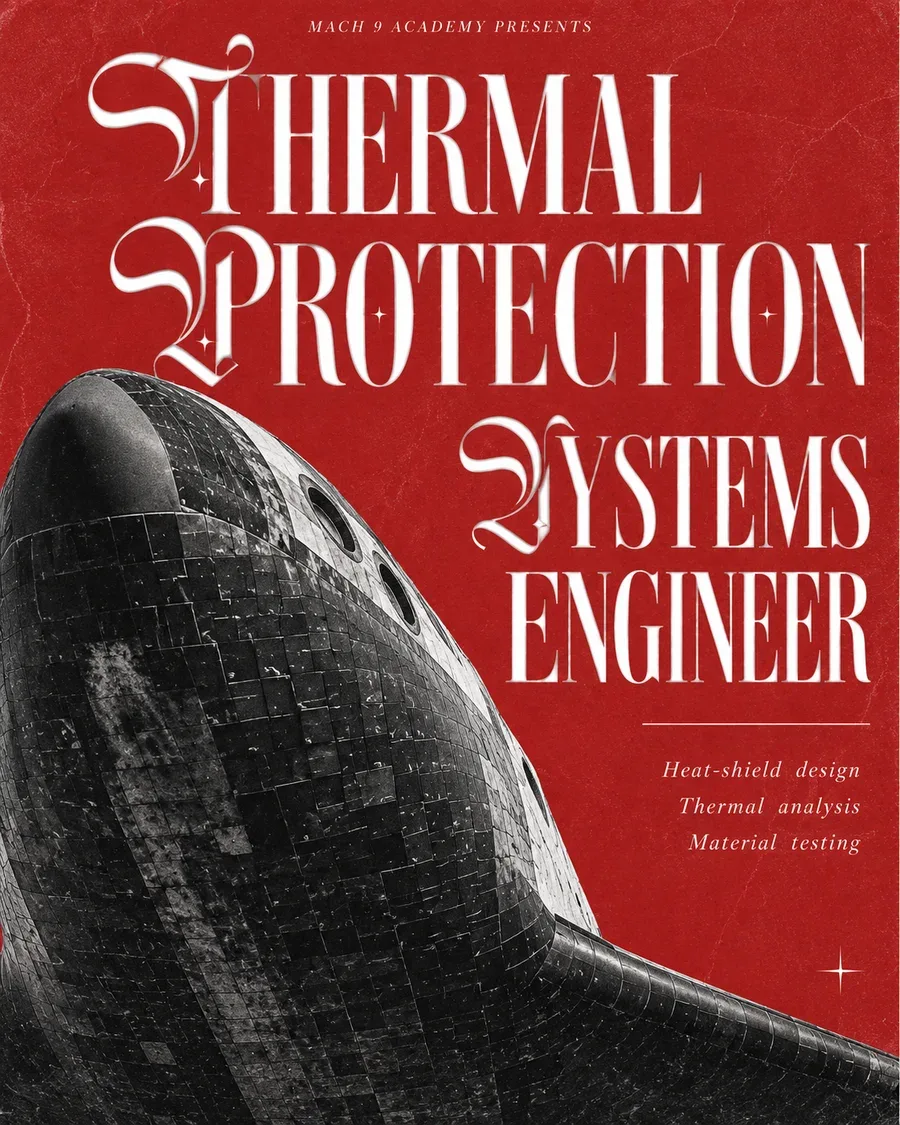
- CareerThermal Protection Systems EngineerDesigns the material that stands between a vehicle and the heat of going fast.
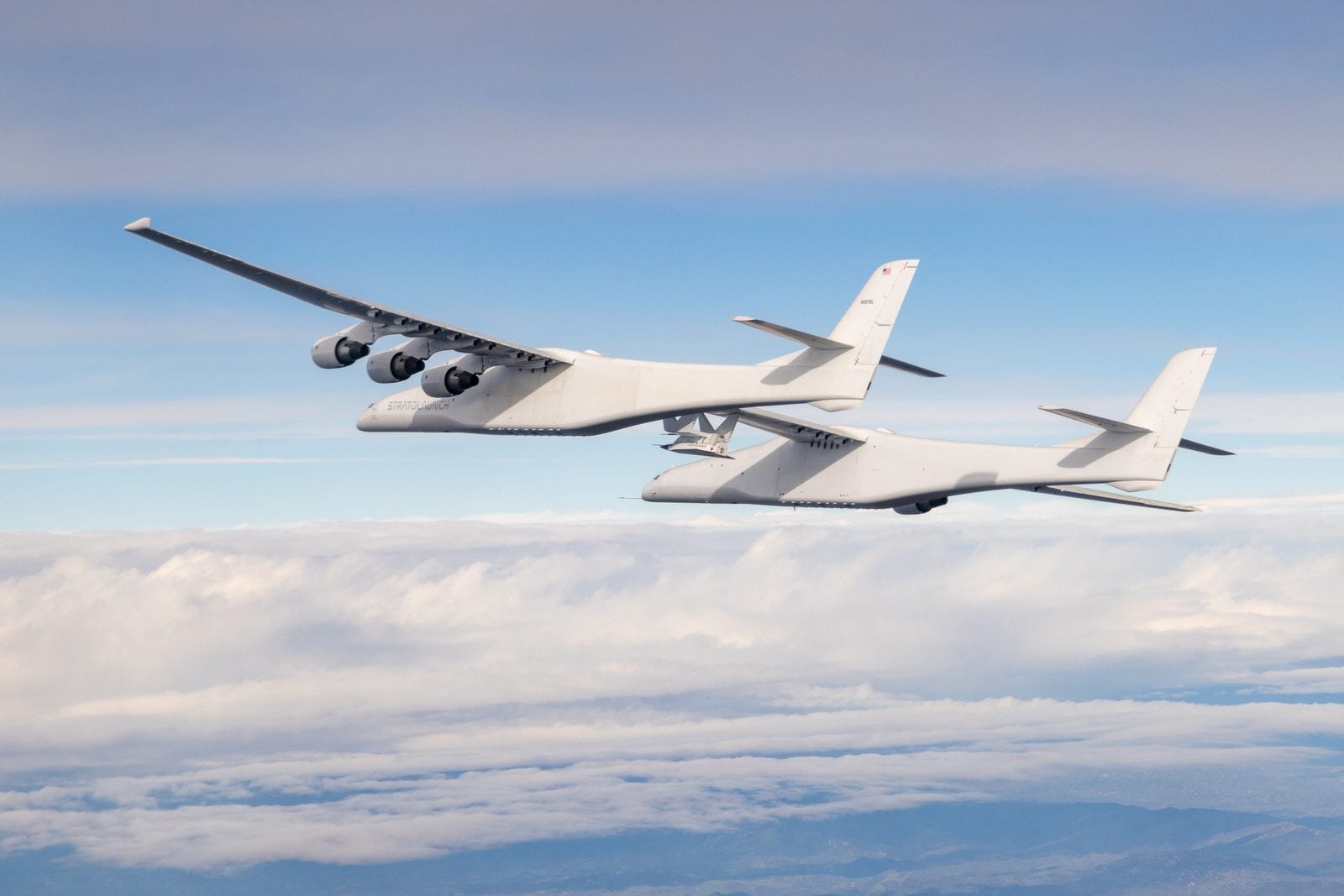
 Steve Jurvetson, CC BY 2.0Interactive storyCatching a 71-metre rocket out of the skySpaceX stopped landing its booster on legs and started catching it out of the air instead. Here is why that is even harder than it sounds.
 Eva Folsom, CC BY-SA 4.0ExplainerA hypersonic aircraft that flies, lands, and flies againStratolaunch says its Talon-A vehicle has now flown past Mach 5 more than ten times, the same airframe, refurbished and reflown, on a testing programme that used to mean building a new vehicle for every flight.